The bulk of our main day in Charleston included Magnolia plantation just outside of Charleston along the St. Lawrence River. It was a rice plantation before and during the Civil war, but after the war, when they could no longer keep slaves, the owner turned it into a beautifully landscaped garden of sorts for his wife and let visitors pay to ride the river boat up to its shore and tour the plantation. We wandered through the gardens and over the bridges and ponds and then took a tour of the “Big” house and a tour of the slave quarters.
Here was the long beautiful drive into the plantation.
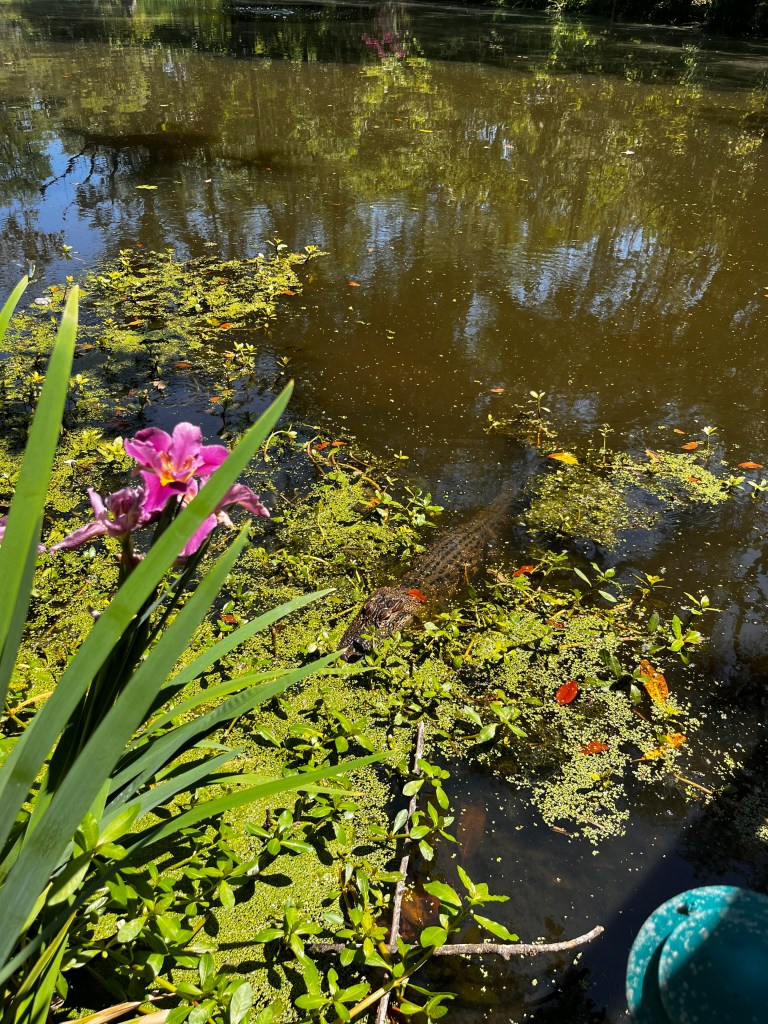
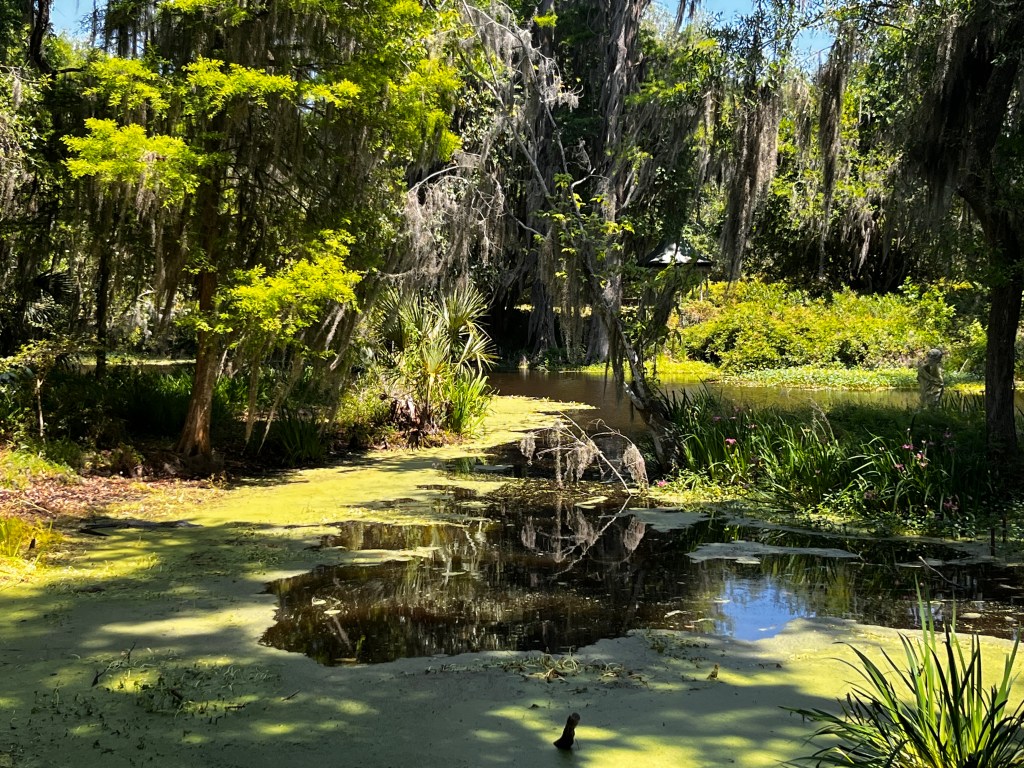
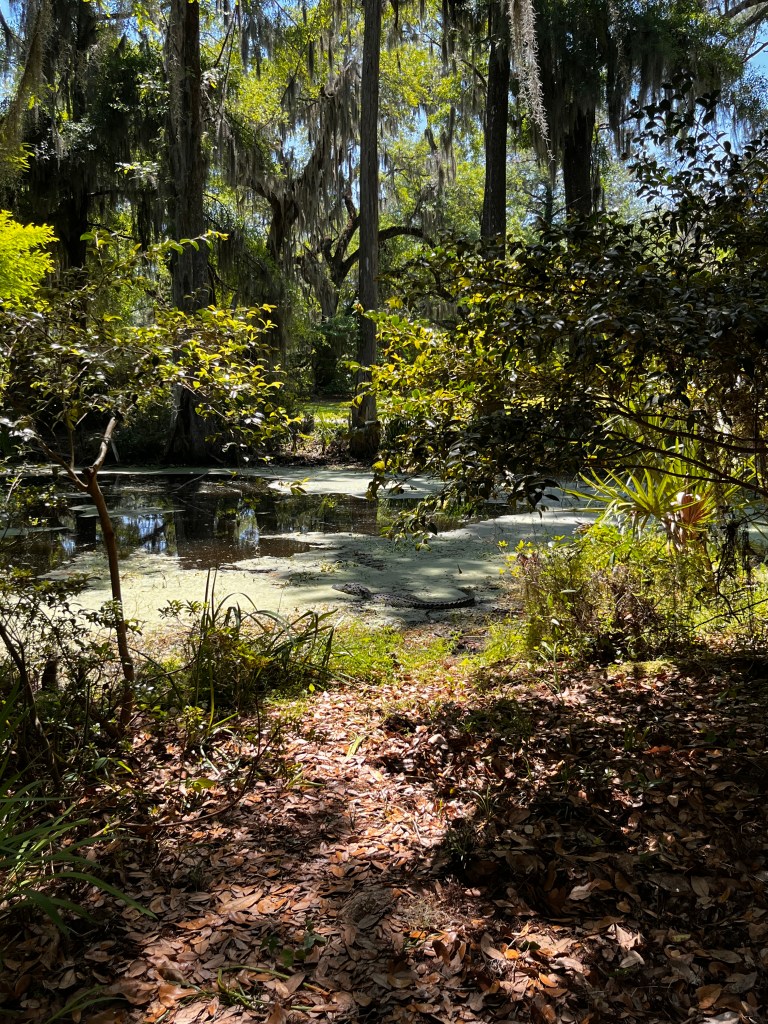
I knew that we might get to see some alligators in the swampy ponds and marshes on the plantation and no sooner had we stepped onto the first bridge when we saw one. I would have walked right by him if it hadn’t been for two ladies who pointed him out to me.
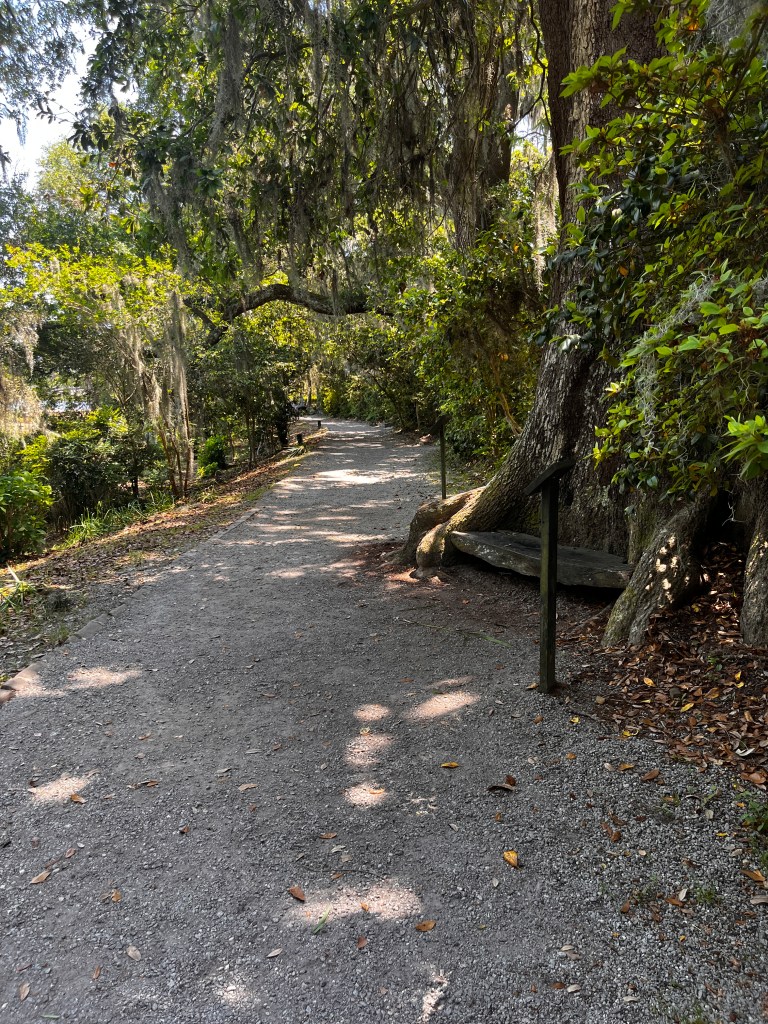
As we wondered along the garden paths we came across this wonderful little sitting place. Apparently the owner of the plantation, who was also a minister, would sit here in this spot to commune with God and write his sermons.
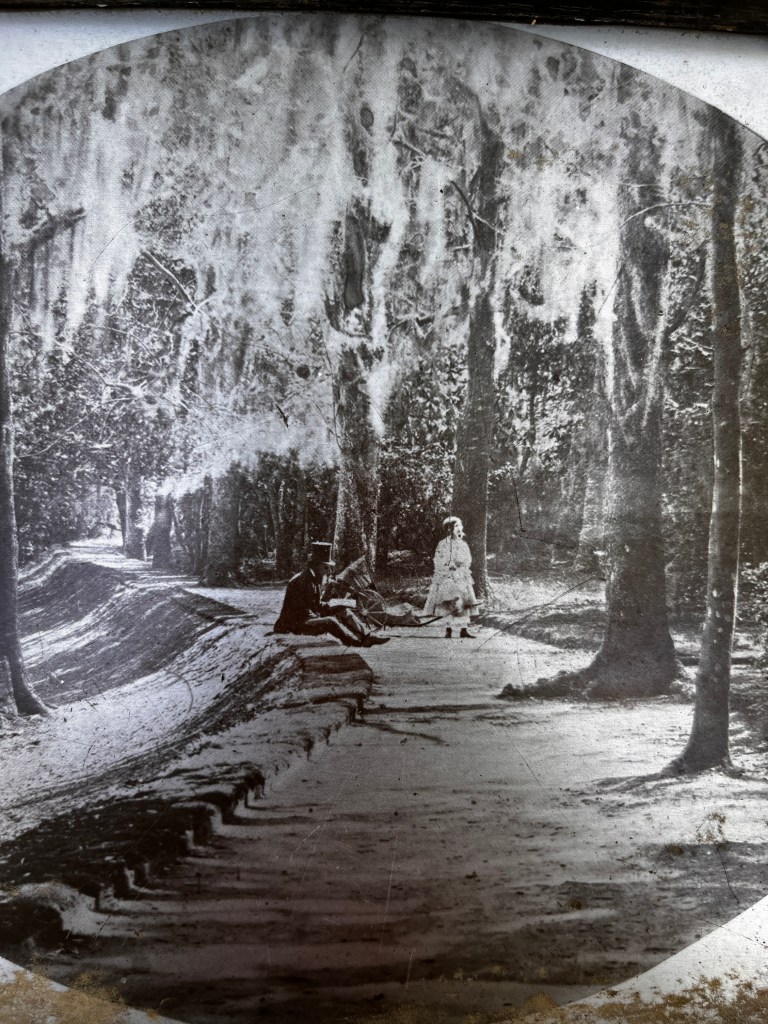
They actually have a plaque there with a picture of the same spot from the 1800’s taken of the owner and his daughter.
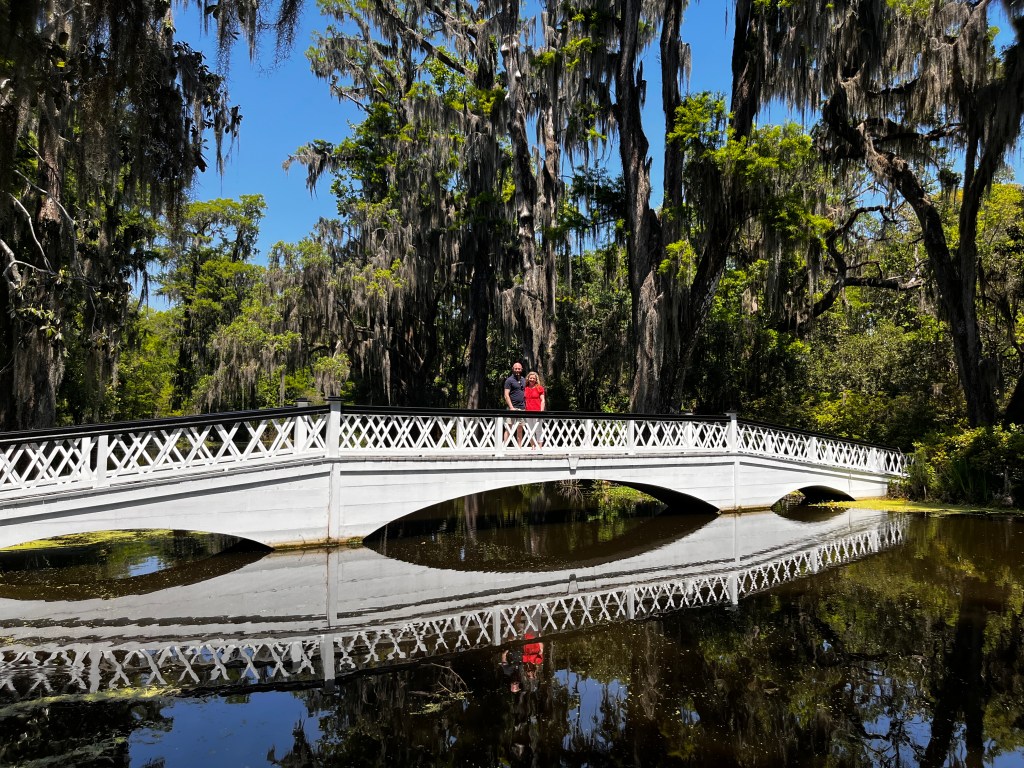
Alligator #2 Can you see him?

We came across this beautiful crane hunting for food. It was mesmerizing to watch how still and quiet he was. I understand now why Eastern philosophy uses the crane so much to embody stillness and peace.

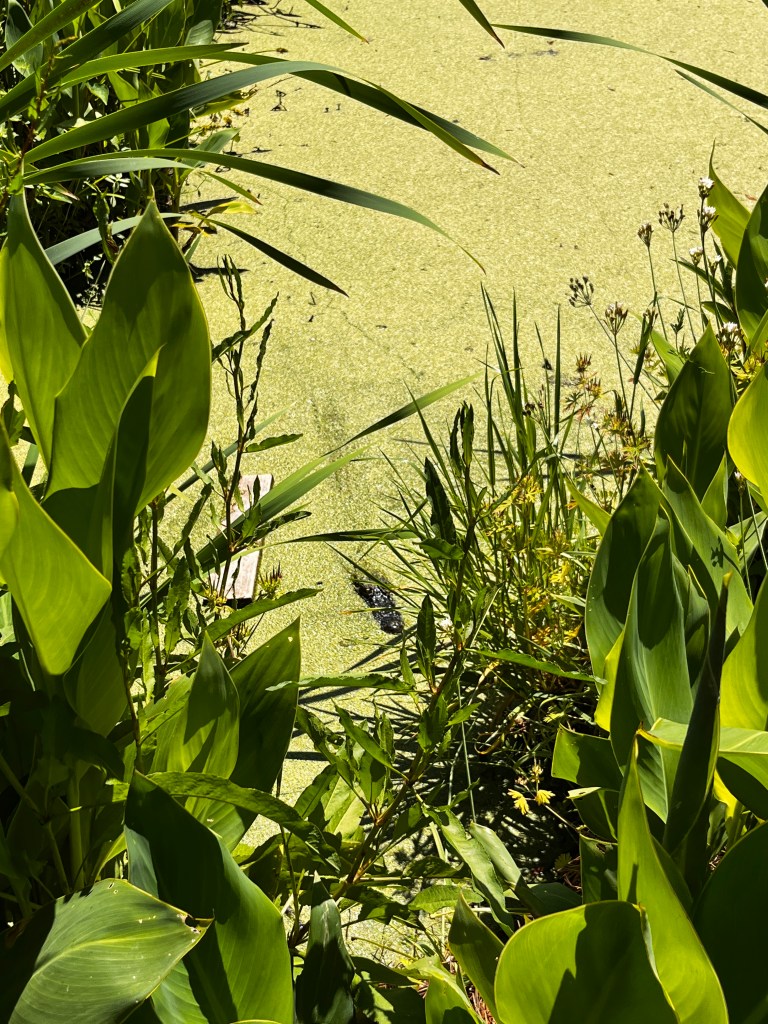
Alligator #3 Can you see him?

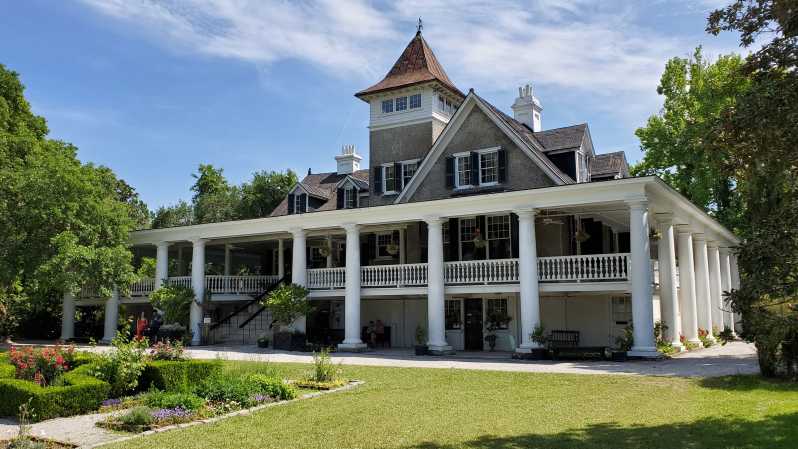
I never really got a great picture of the house. And they wouldn’t let us take pictures inside it. So here’s an internet picture of the front.

The last thing we did on the plantation was take a tour of the slave quarters. We had a fabulous guide who was more story teller than tour guide. She captivated us with the history of slavery on a rice plantation. Even after the slaves were freed, one family stayed on and worked the gardens for generations. Here’s a picture of an original slave hut.
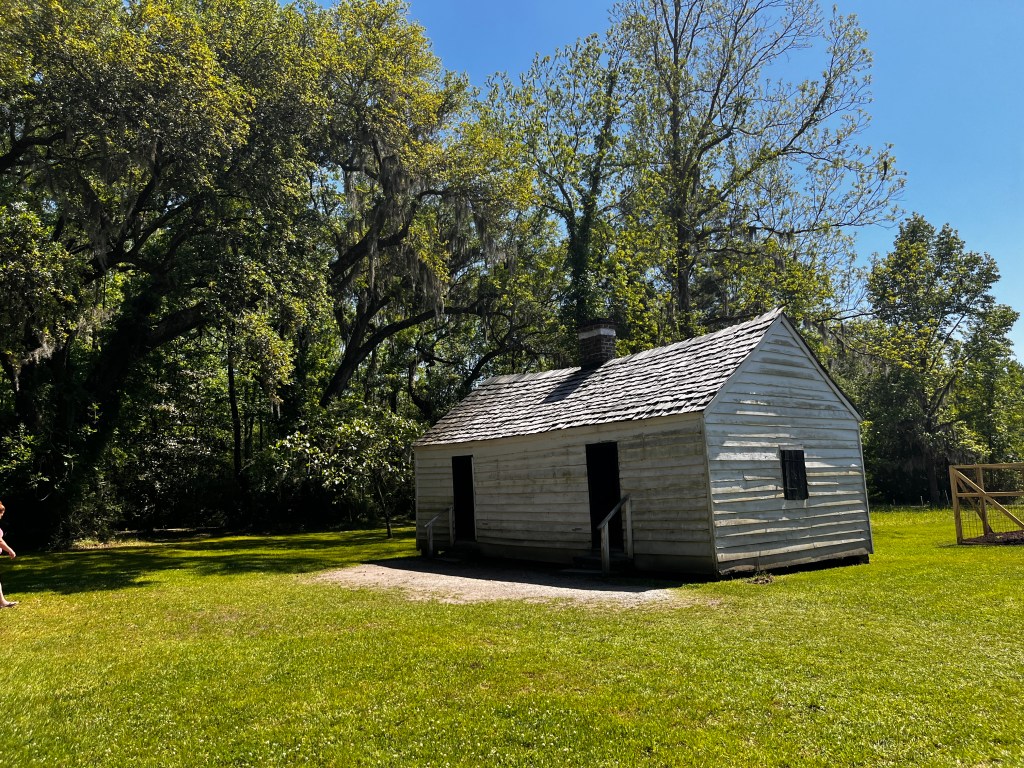
As time went by, the huts became much more liveable. They have four there on the plantation, each one showing the progression over time.
We woke up at 5 the next morning to catch a 7:30 flight home. Everything was going fine until we’d been sitting on the airplane for about 10 minutes and the captain came on the intercom to tell us that he saw hydrolic fluid leaking from the airplane and he was going to keep us there for a bit longer to get some mechanics in to fix it. Thirty minutes later he came back on to say that because we were at a small airport with only contracted mechanics, he hadn’t been able to get anyone to come fix the problem. He wasn’t ready to cancel the flight yet, but told us we could remain on board or get off the plane if we needed to. Thirty minutes after that, he got on and told us that it had been an hour which meant he had to cancel the flight and that we all had to get off and find new flights home. Thus began our 2 hour wait in line to find a new flight home. When we finally made it to the counter there were no more flights to Boise. So we decided to get a flight home the next morning and stay one more night in Charleston, courtesy of United Airlines. We got a shuttle to the hotel and headed out for another night on the town!
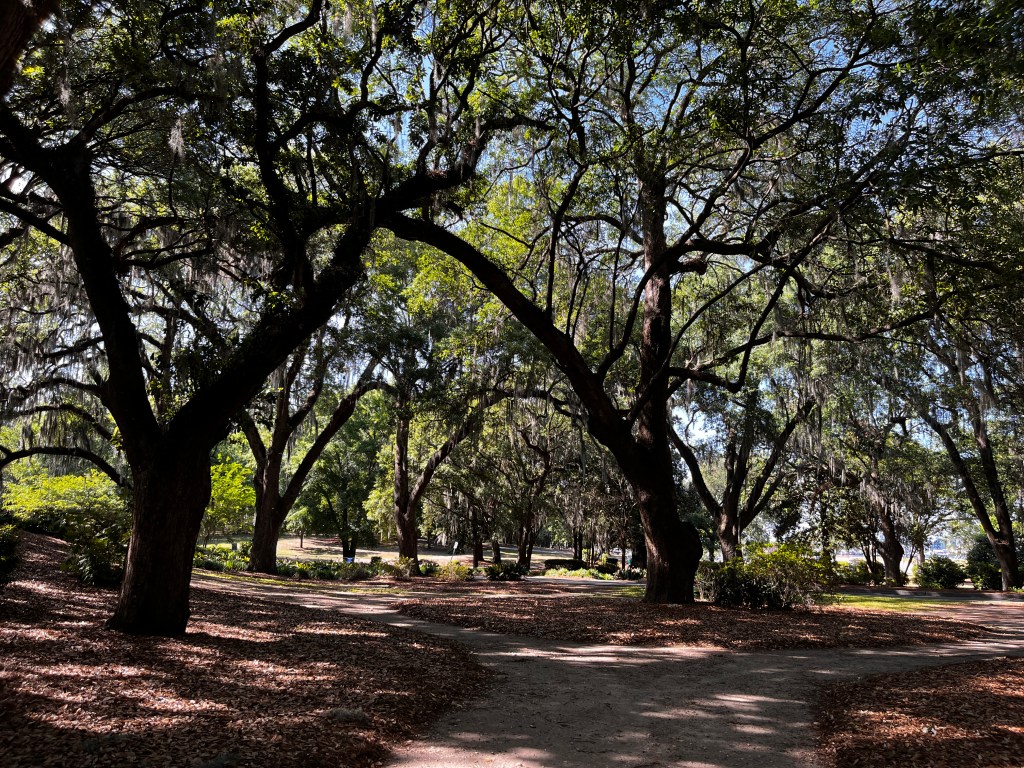
We went to Riverfront Park, home to the Charleston Naval Base Memorial and the beautifully restored historic homes once occupied by naval officers. My pictures again don’t do this park justice, but here are a few.
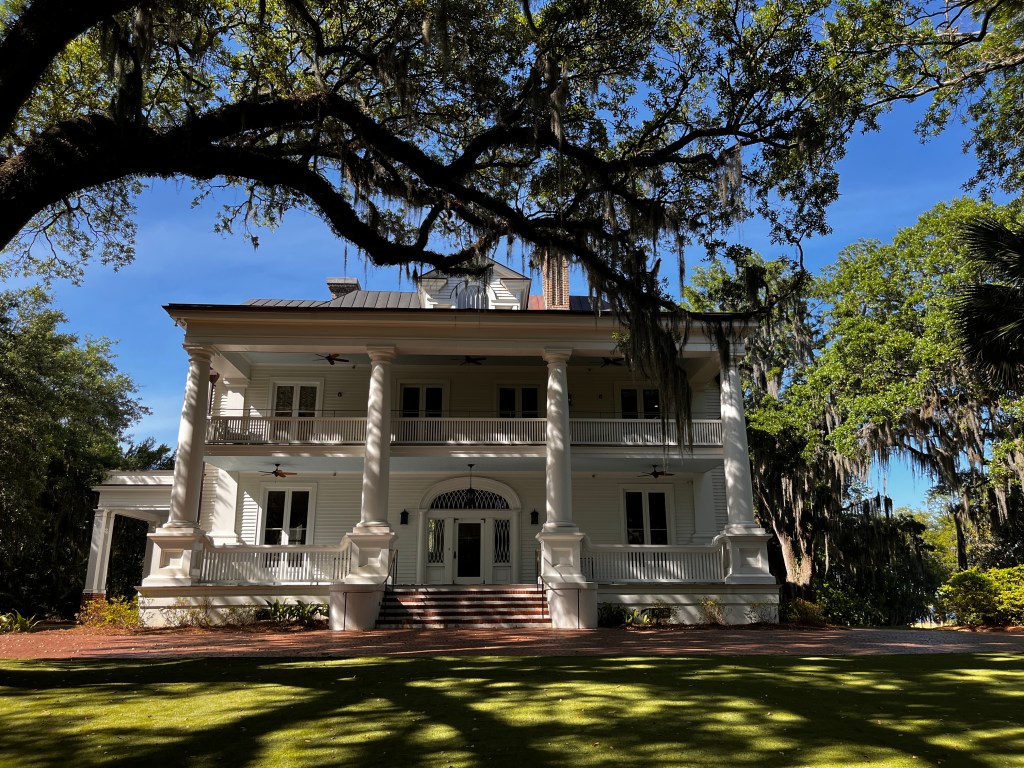
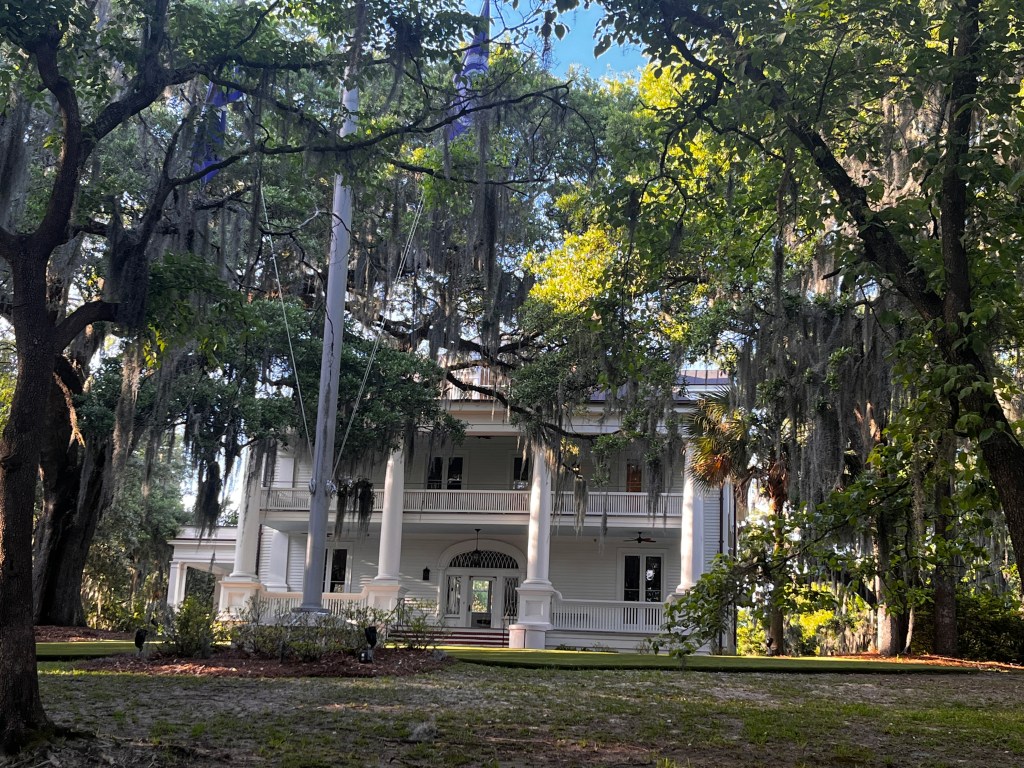
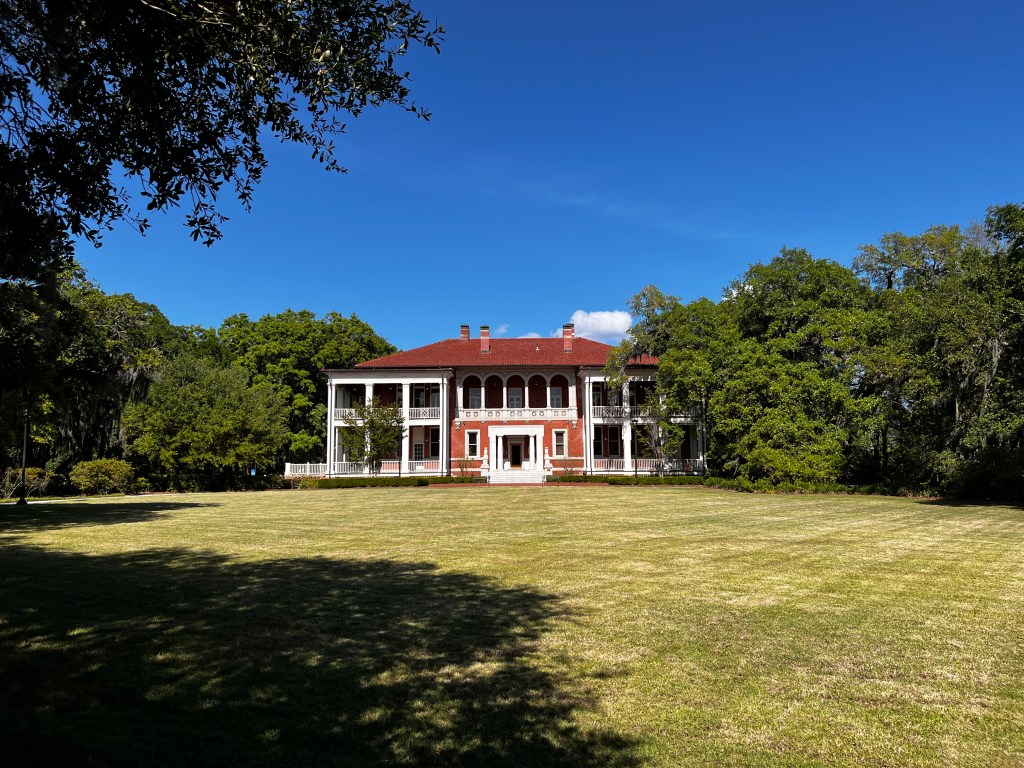

We had dinner at a restaurant along the river and ate dinner while watching the huge cargo ships passing by on the Cooper River.
We got ice cream for dessert and then walked back to our hotel. And THAT was the end of our trip. The next day the flight went as planned and we arrived home to the still as yet winter brown hills and bare trees of Boise and I was a little sad. I loved the lush green and romantic history of the South and was a little jealous of those people who call it home.
 Short n Sweet